About Us

Showing posts with label Eric Mchunu. Show all posts

Wednesday, 3 July 2024

IRESS (McGregor) at UKZN LIBRARY


by Mbangiseni Eric Mchunu

What is an IRESS?

IRESS is a technology company that provides financial market data, trading platforms, and wealth management software to clients in the financial services industry (Matemane & Graca, 2023). Its flagship product, IRESS Viewpoint, is a comprehensive platform that offers real-time market data, news, research, and analysis tools to help investors make informed decisions IRESS also provides trading and execution tools, including order management systems, market data feeds, and connectivity to multiple exchanges (Mabandla & Makoni, 2019). In addition, IRESS offers wealth management software that helps financial advisors manage client portfolios and provide financial planning services. Overall, IRESS is a leading provider of financial technology solutions that help clients stay ahead in a rapidly evolving financial landscape.
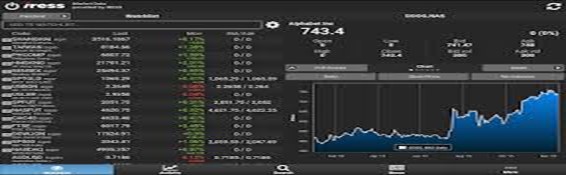


Does the UKZN Library have IRESS as one of its databases?

Yes, the UKZN Library does have access to IRESS. The library provides access to the IRESS viewpoint platform, which offers real-time market data, news, and analysis for multiple asset classes, including equities, derivatives, and fixed income. To access IRESS Viewpoint, users must log in to the library's website using their UKZN login credentials and navigate to the databases section. From there, they can select IRESS Viewpoint and start using the platform. The library also provides training and support for users needing assistance using IRESS Viewpoint. Overall, the availability of IRESS Viewpoint at the UKZN Library is a valuable resource for students, faculty, and researchers in the finance and economics fields.


To access IRESS at UKZN library

https://library.ukzn.ac.za/databases-a-z/    

Then select alphabet I for IRESS


How is the IRESS important in retrieving financial information?

IRESS is an essential tool for retrieving financial information. It provides real-time market data and statistics, which can be used to make informed investment decisions. IRESS also offers a range of analytical tools and charting capabilities, enabling users to conduct technical analysis and identify trading opportunities. Additionally, IRESS allows users to access news and research from various sources, providing valuable insights into market trends and developments. According to Mabandla & Makoni (2019) IRESS is a robust platform that can help investors stay informed and make better decisions.


References

Mabandla, N. Z., & Makoni, P. L. (2019). Working capital management and financial performance: evidence from listed food and beverage companies in South Africa. Academy of Accounting and Financial Studies Journal, 23(2), 1-10.

Matemane, R., & Graca, N. (2023). The Relationship Between Climate Risk Disclosure and Performance on Mining Companies: Evidence From A Developing Economy. International Journal of Environmental, Sustainability, and Social Science, 4(5), 1576-1594. 

Tuesday, 28 May 2024

Bloomberg Terminal at UKZN PMB

by Mbangiseni Eric Mchunu

What is Bloomberg?

The Bloomberg product is a computer software system provided by the financial data vendor Bloomberg L.P. that enables professionals in the financial service sector and other industries to access Bloomberg Professional Services through which users can monitor and analyse real-time financial market data, news feeds and messaging (Sharma & Elliott, 2015). The system also provides trading platforms and enables electronic trading of financial assets.


Where can you find the Bloomberg terminal on the Pietermaritzburg Campus?

One is at the Main Library, Cecil Renauld Library, and another two at the New Arts Building, 3rd floor.


How does Bloomberg help Finance students?

Bloomberg can be a valuable resource for finance students in several ways. Look below: -

  1. Access to real-time market data: Bloomberg provides students with real-time market data, allowing them to stay up to date on the latest financial news and trends.
  2. Tools for financial analysis: Bloomberg offers a range of tools for financial analysis, including charting, screening, and back testing. These tools can help students analyse financial data and develop investment strategies.
  3. Exposure to industry professionals: Bloomberg provides students access to industry professionals through its messaging and networking features. This can be an excellent way for students to connect with potential employers and learn more about career opportunities in finance.
  4. Preparation for professional certifications: Many professional certifications in finance, such as the CFA and FRM, require candidates to have experience using Bloomberg. Using Bloomberg in their coursework can help students gain valuable experience that will help them prepare for these exams.
  5. Bloomberg can be a valuable resource for finance students seeking real-world experience and developing their financial analysis and trading skills.


References

Bloomberg. (2020). Bloomberg business week debrief. Retrieved February 27, 2024. https://www.bloomberg.com/news/videos/2020-07-14/bloomberg-businessweek-debrief-betterment-s-jon-stein-video

Bloomberg, M., Winkler, M., & Winkler, M. (2019). Bloomberg by Bloomberg. Wiley.

Sharma, A., & Elliott, C. (2015). Use of Bloomberg professional in support of finance and economics teaching. Cogent Economics & Finance, 3(1). https://doi.org/10.1080/23322039.2015.1115618

Thursday, 15 March 2018

Be considerate, Everyone wants a quiet place to study!


By Susheila Naidoo and Eric Mchunu
Noise in the UKZN libraries is a constant source of concern for library staff and students. Literature suggests that students are more likely to follow quiet policies when there is an authority figure or a monitoring presence in the library (Bedwell and Banks, 2013; Bird and Puglisi, 1984). It has been said that the monitoring figure need not necessarily be a staff member. In their article on library design, Foster and Gibbons (2007) found that students “taught” each other the sometimes implicit rules about the spaces they were in “through an occasional verbal warning” or “gave them ‘the stare’ or glare that communicates‘ be quiet!’. However, given budgetary concerns and current staffing levels which do not allow for a dedicated monitoring presence, we believe that we all can assist with the noise debacle at the UKZN libraries.

Handy tips when faced with disturbance in the library:
  • Drop a subtle, audible hint about being quiet. Instead of raising your voice at the person or group that is loud, make a gesture that will help them get the point that what they are doing is not appreciated. If people are constantly chatting while you are looking for a book, try clearing your throat or coughing softly.
  • Try not to ‘shush’ noisy people loudly in a way that would seem condescending. This might
    make them want to continue being loud because you tried to embarrass them.
  •   Ask students to be quiet. If someone is truly disturbing you with their noise just go up to them and kindly, in a calm voice, ask them to lower their voice. Sometimes just bringing it to their attention that they are being disruptive is all it will take to make them change their behaviour.
  
Try using one of these examples:
“I’m sorry to trouble you, but would you mind keeping it down a bit?”
“Hi. I hate to be that person that complains, but I have a big test tomorrow that I’m trying to study for and I’d really appreciate it if you could tone it down a bit. Thanks!”
“Would you mind moving to a different location? This is a quiet workspace. Thank you!”
  •  Use nonverbal methods to get people to keep their voices down. Most people understand that libraries are meant to be quiet places. A meaningful glance in their direction should give them a hint that a lack of silence is not appreciated in such an environment.
  •  Don’t glare at them or make a mean face. This will only make the situation worse
  • Getting help: call on library staff for help with the noise. UKZN Library staff will be more than happy to assist you in these areas.

Some suggestions to counteract the noise.
  •  If you have noise-blocking headphones, do not be afraid to use them. An mp3 player could also be helpful, but keep the sound down so you do not accidentally ruin someone else's time at the library. Make sure you keep the volume to a very low level.
  • Utilize a private study space. UKZN libraries have group study rooms you can reserve for discussion and study carrels for private study. If the main part of the library is too noisy, try using one of these rooms so that you can have your discussions and have a quiet space to study.
  •  Avoiding a scene in the library. Try not to be rude when you ask someone to be quiet. While it can be very tempting at moments, remember that rudeness will not help to get anything done and will only create conflict. Remember the person you're trying to calm down will probably react to the perceived mistreatment by mistreating you, things will probably only get louder.
  • Move to a quieter location. If someone is being disruptive, try moving locations. If you pack up your things and move further away from them, they may notice and start being more quiet. Either way, you will be further away from the noise and able to concentrate better.
  • In conclusion, we need to consider that when the UKZN libraries were built more than 40 years
    ago noise issues were not a problem, and the enrollment size was not large enough to contribute   to high levels of noise. We believe that all of us can be instrumental in making the UKZN libraries a conducive place to study.  


References
Foster, N.F. & Gibbons, S. eds. 2007. Studying Students: The Undergraduate Research Project at the University of Rochester Chicago: ALA.
Bedwell, L. & Banks, C. 2013. Seeing through the eyes of students: Participant observation in an academic library. Partnership: The Canadian Journal of Library and Information Practice and Research, 8, 1.
Bird, C.P. and Puglisi, D.D. 1984. Noise reduction in an undergraduate library. Journal of Academic Librarianship 10(5), 272-277.
Lange, J., Miller-Nesbitt, A. & Severson, S. 2016. Reducing noise in the academic library: the effectiveness of installing noise meters. Library Hi Tech, 34, 45-